
CONTACT INFORMATION

Location: Gravias 4Α, 15125 – Marousi

Phone.: +302106302000

Fax: +302106302991

E-mail: info@helpe-patraikos.gr

The Hellenic Centre for Marine Research

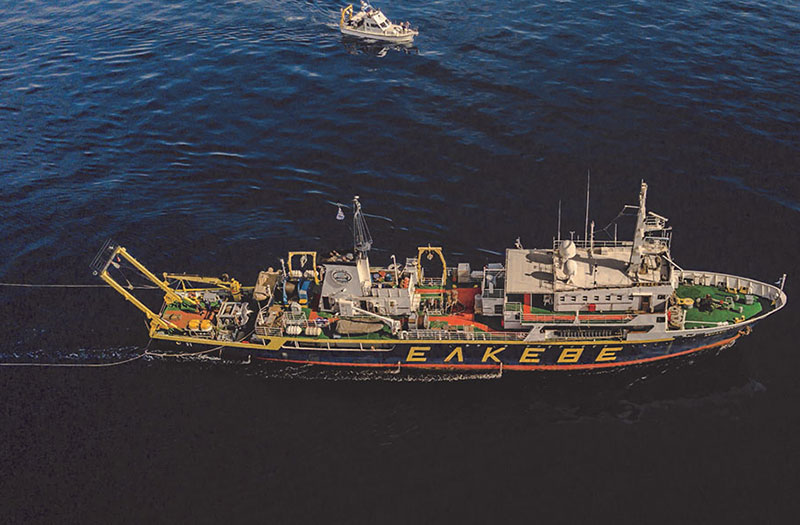
Greece (HCMR) was contracted by Hellenic Petroleum West Patraikos Exploration and Production of Hydrocarbons S.A. to conduct a seabed and shallow geophysical geohazard site survey, shallow gravity coring, and an environmental sampling survey and habitat assessment baseline study ahead of drilling operations in the West Patraikos Area. The survey operations were carried out from the vessel R/V AEGAEO equipped with a complete spread of survey sensors. The geophysical survey was conducted between 2 and 25 November 2018.

The aim of the geophysical survey was to map any seabed / surface hazards or obstructions of the defined well location and the mooring zones for a semi-submersible drilling rig. To assist in the identification of shallow geo-hazards and geological conditions, which may be used to support the assessment of anchoring and installation of a semi-sub drilling rig or drillship and subsequent drilling operations.
perivallon

Site Survey Objectives:

  • Identify any seabed obstructions that may impact anchoring or the well location
  • Establish water depths and seabed conditions
  • Assist in the identification of all geo-hazards and geological conditions relating to anchoring and installation of a semi-sub drilling rig or drillship and subsequent drilling operations from the acquired data.

The geophysical survey included the following:

  • 64 main lines trending N-S at 150 m spacing and length between 7.1 and 14.3 km to be surveyed with multi-beam echo-sounder, side scan sonar, deep-towed Chirp sub-bottom profiler (DTCP) and Sparker sub-bottom profiler
  • 14 cross lines trending E-W at 1000 m spacing and length between 6 and 9.6 km to be surveyed with multi-beam echo-sounder, deep-towed Chirp sub-bottom profiler (DTCP) and Sparker sub-bottom profiler
  • 12 lines across the western (4) and the eastern (8) slopes to be surveyed with multi-beam echo-sounder deep-towed Chirp sub-bottom profiler (DTCP) and Sparker sub-bottom profiler.

Environmental Sampling

The Hellenic Centre for Marine Research, Greece (HCMR) was contracted by Hellenic Petroleum West Patraikos Exploration and Production of Hydrocarbons S.A. to conduct an Environmental Baseline Sampling Survey and Habitat Assessment with the aim to establish the physico-chemical and macrofaunal conditions ahead of drilling operations in the West Patraikos Area. The survey operations were carried out from the Research Vessel AEGAEO. The sampling survey was conducted between 2 and 25 November 2018.

Site Survey Objectives:

Identify and delineate any internationally protected or sensitive habitats at the well site and across the coastal areas and identify any areas of environmental interest, which could be impacted by anchoring or drilling activities.

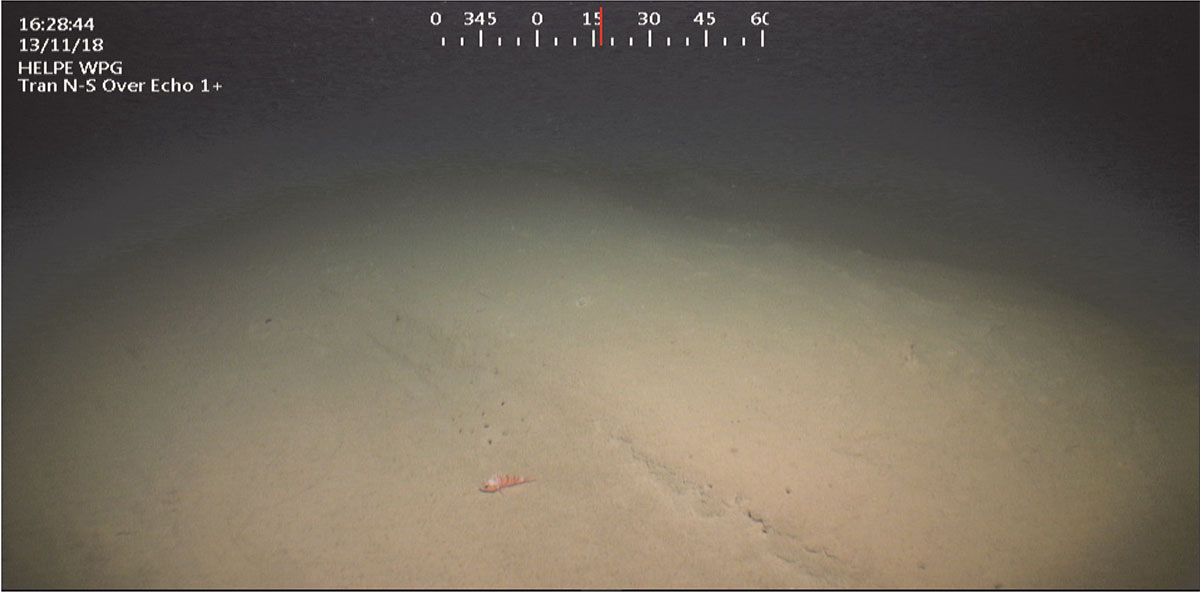
ROV video any features of interest for the purpose of identification of benthic habitats and communities.

Establish Environmental Baseline conditions.

The environmental sampling was conducted aboard the Research Vessel AEGAEO, owned by the Hellenic Centre for Marine Research and utilized the following instrumentation:

  • Visual Observations of the seafloor.
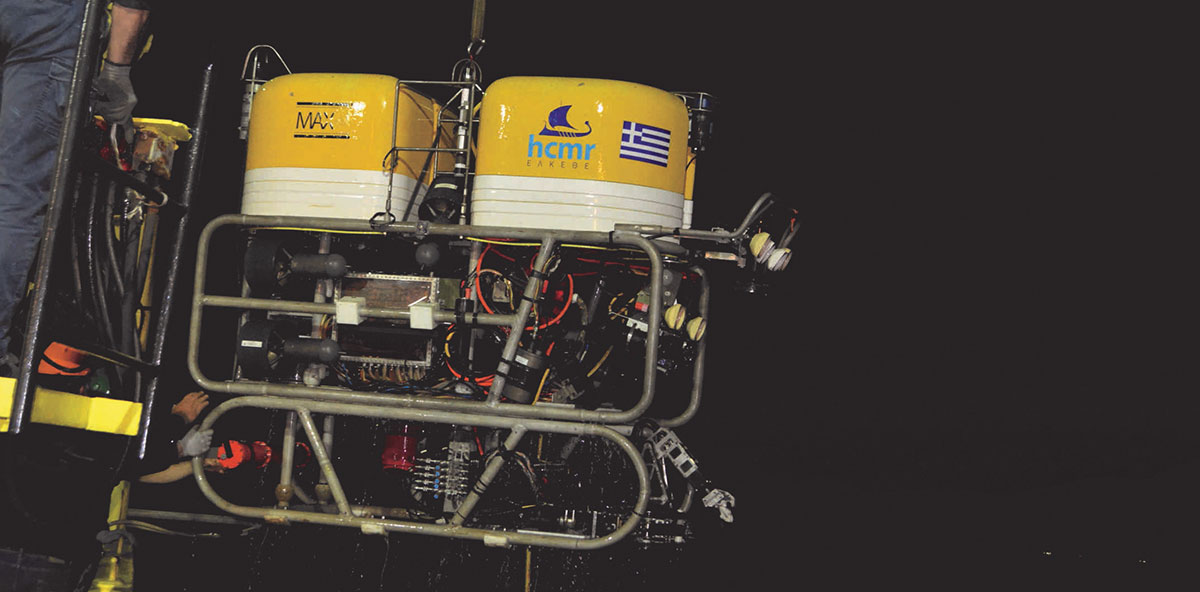
  • Visual Observations of the seafloor in the near-well area were accomplished with the use of ROV Max Rover.
  • Oceanographic parameters: Seawater temperature, salinity and turbidity were measured with a SBE-9plus CTD profiler deployed from R/V AEGAEO.
  • Velocity and direction of currents. They were measured during the survey with the use of an Ocean Surveyor (Teledyne RD Instruments, USA) 75 kHz Doppler current profiler (ADCP) mounted on R/V AEGAEO. Current measurements were performed continuously throughout the duration of the field survey and covered the entire West Patraikos Gulf.
  • Water column sampling. It included at least three (3) samples in every station: (i) below the sea surface, (ii) in the middle of the water column and (iii) close to (1-2 m above) the seafloor.
  • Seafloor sediment geochemistry, hydrocarbon and heavy metals concentration, sedimentation rates
  • Heavy metals concentration and Hydrocarbon concentration in living organisms

image bot

image2